The Most Valuable Biomes to Discover
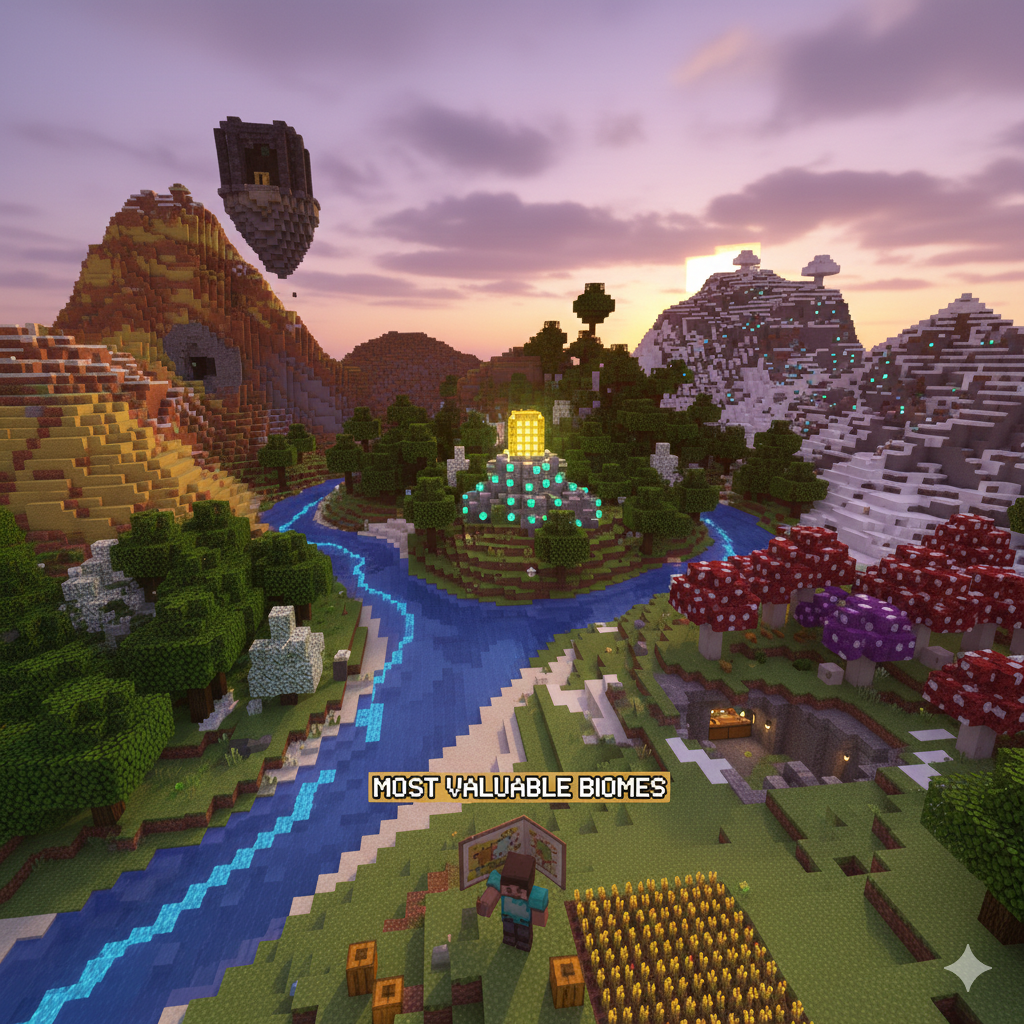
Minecraft continues to captivate millions of players worldwide, and much of that appeal comes from its remarkable creative possibilities. At the heart of this experience are biomes, distinctive regions that shape how you explore, build, and survive. Each biome brings its own landscape, vegetation, and unique characteristics that influence your gameplay strategy.
Think of biomes as the building blocks of your world. They’re not just pretty backgrounds. They determine what resources you’ll find, what challenges you’ll face, and what kind of base you can create. Understanding these different environments opens up the full potential of what the game has to offer.
Top Biomes Every Player Should Know
1: Plain Biome(Your Perfect Starting Ground)
Plain biomes remain one of the most welcoming places for new and experienced players alike. These wide open spaces covered in grass offer incredible versatility for anyone wanting to establish a solid base. There’s something reassuring about the simplicity of plains, they give you room to think and build without immediate threats.
Features of plain Biomes
- Great for larger buildings in plain biomes.
- Players can explore areas with flowers and grass.
- The players also provide opportunities like crops and trade.
- Players can explore rivers and lakes for mining.
- Plain biomes have a peaceful environment.
Challenges :The main drawback is obvious: trees are sparse. You’ll need to venture elsewhere or plant your own if you want a steady supply of wood. It’s a small price to pay for such a builder-friendly environment.
2: Taiga Biome (Where Survival Meets Natural Beauty)
Taiga biomes have earned their popularity through a combination of abundant resources and striking scenery. These forested areas come in several varieties. Standard taiga features green grass and countless spruce trees perfect for logging. Snowy taiga transforms the landscape into a winter wonderland where you might spot polar bears roaming around. The rarer mega taiga (now called old growth taiga in recent updates) presents a more dramatic, isolated feel with its massive trees.
Key Features Of Taiga Biome
- Players get plenty of construction materials.
- Different wildlife in these biomes can befriend the players.
- The natural scenic view of Taiga Biomes forces players to settle in the area.
- Tiaga biomes allow players to trade with the Minecraft game.
- Players can get snowblocks in the Tiaga biomes.
Challenges : Food can be tricky to find initially, and the wolves that make such great pets can be dangerous if you accidentally provoke them. Still, most players find the benefits far outweigh these manageable risks.
3: Savana Biome (Unique Beauty in the Grasslands)
Savana biomes stand out immediately because of their distinctive acacia trees, which don’t naturally spawn anywhere else. The landscape rolls gently with yellow-tinted grass that perfectly captures the feeling of a warm, dry climate. Oak trees dot the terrain as well, but it’s those orange-barked acacias that define the savanna aesthetic.
Key Features Of Savana Biome
- Savana biomes are flat, tall grass and oak trees.
- In Savana biomes, the grass is yellow, reflecting the dry climate.
- Players can make beautiful homes with the help of Acacia in savana biomes.
- In Savana biomes, we have dry and hot climates that don’t experience snowfall.
- In Savana biomes, players can also obtain wool from animals that can be used to craft various items.
- Villages are available for the shelters and to find food resources.
Challenges : Water is the big challenge. You’ll need to explore thoroughly to find reliable water sources for your farms and daily needs. The tree variety is also limited compared to other forested regions, so plan your wood harvesting accordingly.
4: Jungle Biome (Adventure and Resources Combined)
Jungle biomes pack more density and vertical variation than almost any other region type. Massive trees tower overhead, vines hang everywhere, and the undergrowth creates a genuinely wild feeling. Navigation becomes an adventure in itself as you push through the thick vegetation.
Key Features Of Jungle Biome
- Various secrets and treasures are hidden in the jungle biomes.
- Jungle biomes also have animals not found in other Minecraft worlds, making the game environment more interesting.
- Players can find tall trees to build beautiful houses.
- In the Jungle Biome, there are unlimited natural resources that could help the players survive.
- In Jungle biomes, players have opportunities to find flora, unique wildlife, and various resources.
Challenges: Getting lost is a real possibility when you’re surrounded by dense jungle. The terrain can be frustratingly difficult to clear if you want to build something large. Hostile mobs hide easily in the shadows created by the thick canopy. You’ll want to bring plenty of torches and maybe set up visible landmarks as you explore
5: Ice Spikes (A Frozen Wonderland)
Ice spikes biomes create some of the most memorable landscapes in the game. Towering pillars of packed ice jut dramatically from snow-covered ground, creating an alien yet beautiful environment. It’s cold, it’s challenging, and it’s absolutely worth visiting.
Salient Feature of Ice Spike
- Packed ice is used for buildings.
- Blue ice is used for high-speed travel and for creating ice trails.
- It gives a nice touch to the environment with snowy rain.
Improvement: Recent improvements to ice-based mechanics have made these regions even more valuable for players who understand the transportation possibilities. Just remember to bring warm thoughts, the cold won’t hurt you, but the isolation might feel intense.
6: Ocean Biome (Depths Full of Possibilities)
Ocean biomes have evolved significantly and now represent some of the most content-rich areas you’ll encounter. Warm oceans teem with colorful coral reefs and tropical fish. Lukewarm and temperate oceans offer different marine life. Cold and frozen oceans present their own challenges and rewards. Each variant feels distinct and worth exploring.
Salient Features of the Ocean Biome
- Players can hunt fish.
- Players can find rare items under the seawater.
- A variety of treasures can be found underwater.
Challenges : Underwater players may also encounter hostile creatures such as the Drowned.
7: Desert (Sandy Challenges and Hidden Rewards)
Desert biomes offer a stark, beautiful landscape filled with golden sand dunes and occasional cacti. These dry regions test your resource management skills while providing unique materials you won’t find elsewhere. Recent additions like cactus flowers (which attract bees and provide pink dye) and dry grass have made deserts feel more alive and varied.
The main attractions here are desert temples, villages, and the occasional desert well. You’ll find plenty of sand for glass production, sandstone for building, and cacti that can serve as both decoration and simple defensive barriers. Rabbits hop across the dunes, and husks replace regular zombies during the night.
Water scarcity remains your biggest challenge. You’ll need to bring your own or find an oasis quickly. The lack of wood means you should stock up before making a desert your home base.
Why Biomes Matter to Your Experience
Biomes shape everything about how you play. They determine your exploration routes as you search for specific resources or just satisfy your curiosity about what lies beyond the horizon. The variety of creatures and mobs keeps encounters fresh, you never quite know what you’ll meet when entering a new region type.
Each environment challenges you to adapt your survival strategies. Desert tactics differ completely from jungle approaches, which have nothing in common with ocean survival methods. This variety prevents gameplay from becoming repetitive. The unique blocks found in different areas expand your creative palette, recent updates have only increased this diversity with new wood types, stone variations, and decorative options.
Biomes also serve as natural progression markers. As you become more capable, you’ll tackle increasingly difficult regions, pushing your skills and expanding your territory in the process.
Final Thought
Biomes form the foundation of everything interesting you’ll encounter. They’re not just places to visit, they’re environments to master, resources to harvest, and canvases for your creativity. Each one presents different opportunities and obstacles that make the experience deeper and more engaging.
Your journey really begins when you start appreciating what each region offers. Whether you’re a builder seeking the perfect construction site, a survivor testing yourself against harsh environments, or an explorer cataloging every variant, biomes give you the framework for countless hours of entertainment. With ongoing improvements to visual quality, mob diversity (including adorable redesigned baby animals that have their own unique models and sounds), and environmental details, there’s always something fresh to discover.
Choose an area that matches your current goals and dive in. There’s always something new to discover, some resource you haven’t fully utilized, or some building technique that works perfectly with your surroundings. That’s the beauty of this system, it keeps giving you reasons to explore and experiment with each passing update.